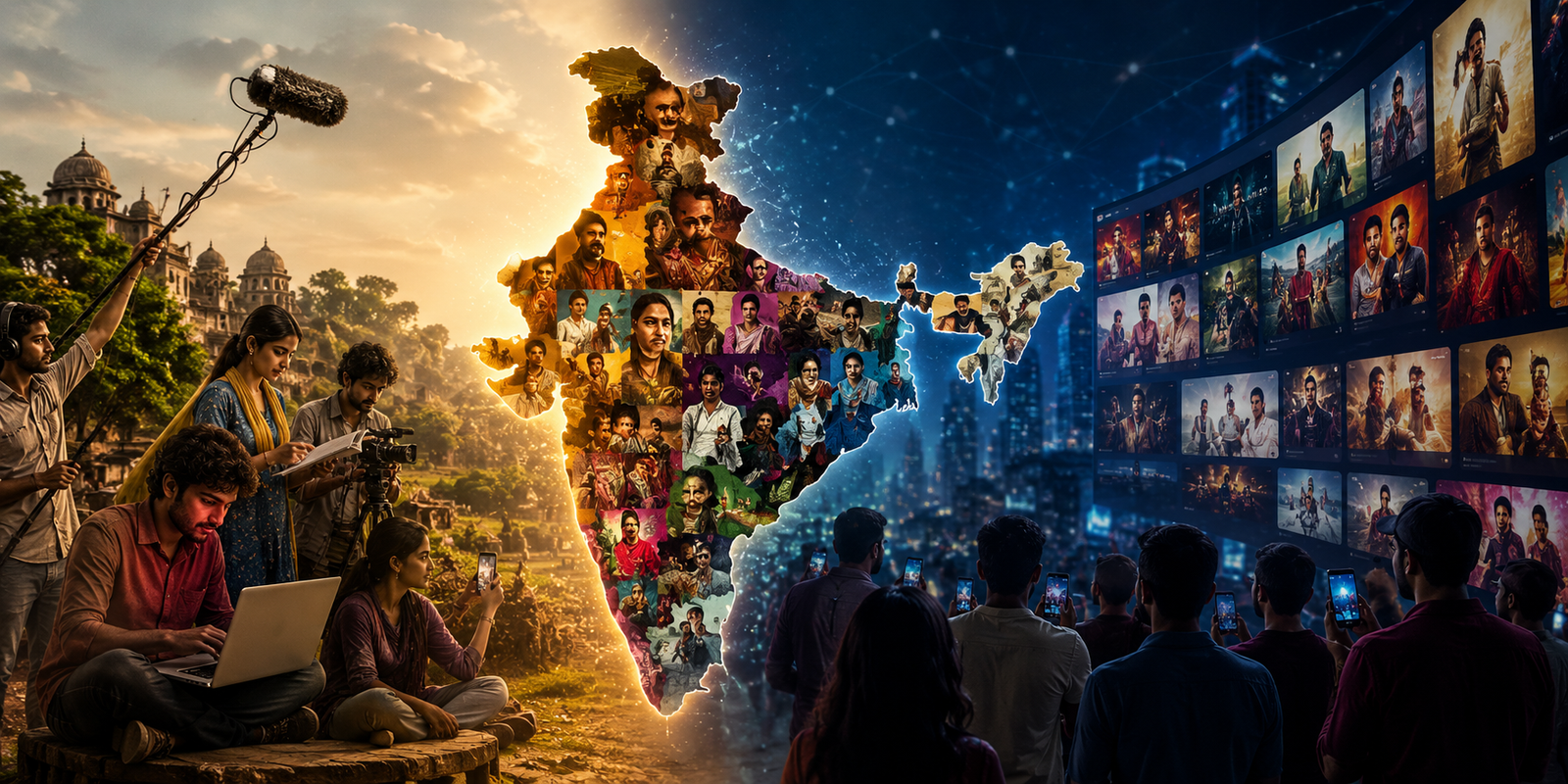
India is one of the most culturally diverse countries in the world. Every state carries its own language, humour, emotions, storytelling style, music, traditions, and cinematic identity. From Marathi theatre-inspired dramas to emotionally rich Tamil storytelling and mass-market Telugu entertainment, regional content has always had a loyal audience. Yet despite this massive demand, regional entertainment still remains underserved in the digital era.
The problem is not the lack of creators. It is not the lack of talent either. The real issue is the lack of dedicated ecosystems built specifically for regional audiences and storytellers. Most mainstream entertainment platforms are designed around large-scale national content. Their algorithms, marketing budgets, and recommendation systems naturally favour Hindi and globally commercial formats. As a result, smaller regional creators often struggle to get visibility even when their content strongly connects with audiences.
Over the last few years, India’s internet consumption habits have changed dramatically. Cheap mobile data and affordable smartphones have brought millions of new users online, especially from Tier 2 and Tier 3 cities. These audiences are not necessarily looking for westernised or heavily polished content. They want stories that feel familiar. Stories spoken in their language. Stories that reflect their culture, family dynamics, humour, lifestyle, and emotions. Yet most platforms still treat regional content as a category instead of treating it as a primary market.
Another major challenge is monetisation. Independent regional creators often have very limited ways to sustainably earn from their work. Large OTT platforms usually invest only in selected high-budget productions, leaving emerging creators with almost no structured support. On the other hand, short-form social media platforms reward virality over storytelling depth. This forces creators to chase trends instead of building meaningful narratives and long-term communities.
Regional entertainment also suffers from a discovery problem. There are thousands of talented creators making strong content across Marathi, Tamil, Telugu, Malayalam, Bangla, Kannada, and many other languages. However, audiences rarely discover them because recommendation systems are dominated by mainstream content consumption patterns.
Even when viewers actively want regional stories, finding quality independent content becomes difficult.
What makes this gap even more surprising is the sheer size of the opportunity. India is not a single-language market. It is a collection of powerful cultural ecosystems. The future of Indian entertainment will not belong only to platforms chasing one national audience. It will belong to platforms that deeply understand individual language communities and build experiences specifically around them.
Regional entertainment is no longer a niche category. It is becoming the next major wave of digital consumption in India. Audiences today are proud of their identity, language, and culture. They do not just want entertainment; they want representation. They want platforms where regional stories are not treated as secondary content, but as the main stage itself.
This is exactly why the future needs culture-first entertainment ecosystems that empower regional creators, improve discoverability, support monetisation, and build stronger audience communities around language-driven storytelling. The demand already exists. The creators already exist. What India truly needs now are platforms built specifically to connect the two.